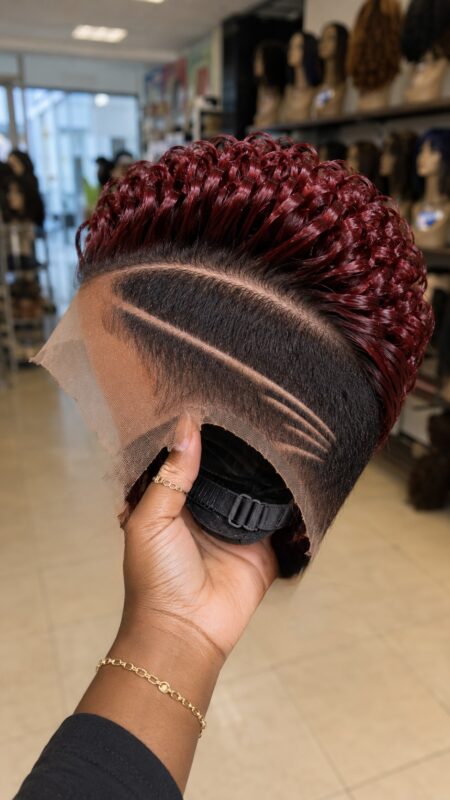
A short curly pixie can look simple at first glance, but some of the smallest construction decisions determine whether the finished style looks balanced. One of the most important is the transition between the dense curls on top and the flatter hair around the temple.
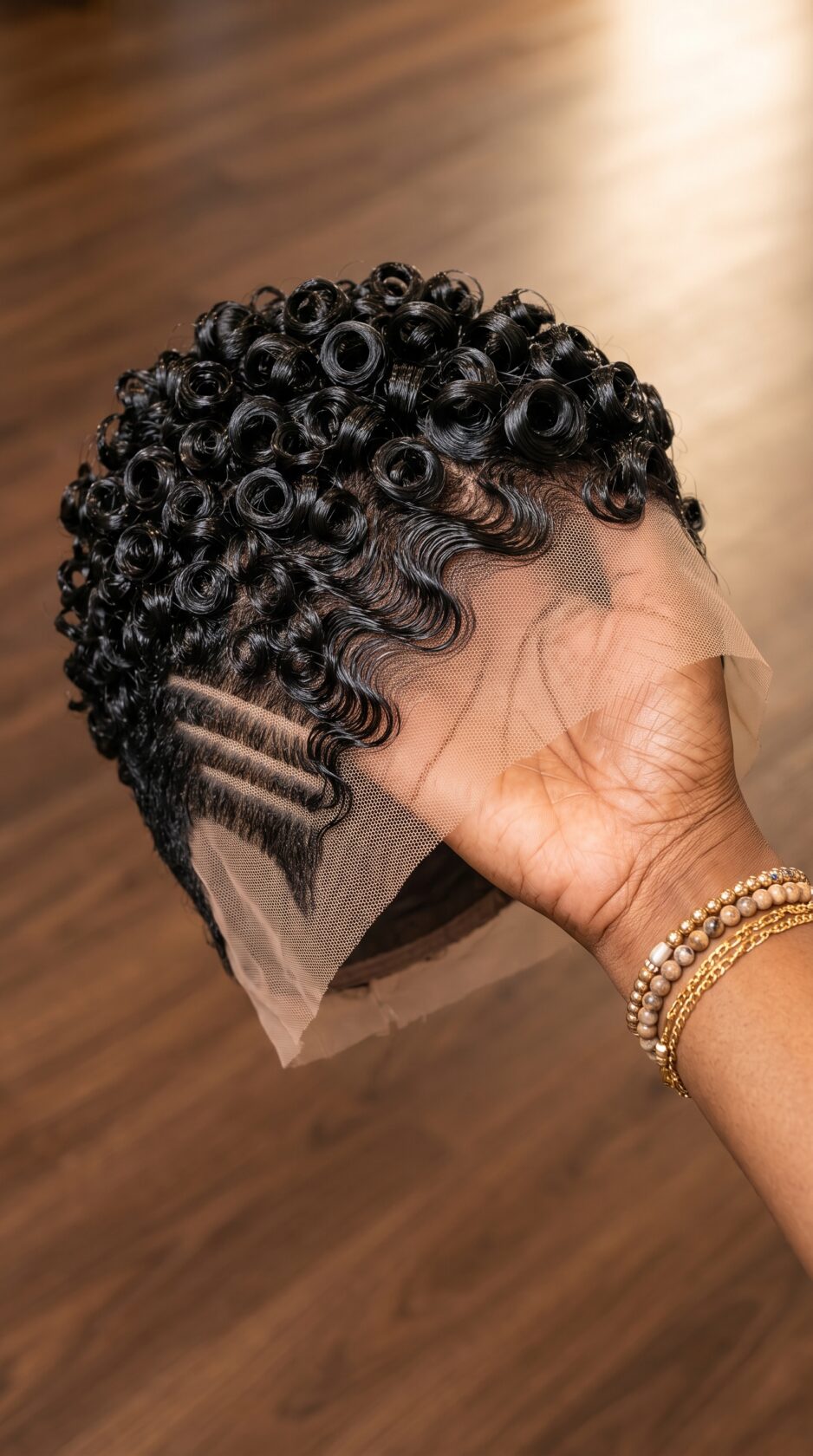
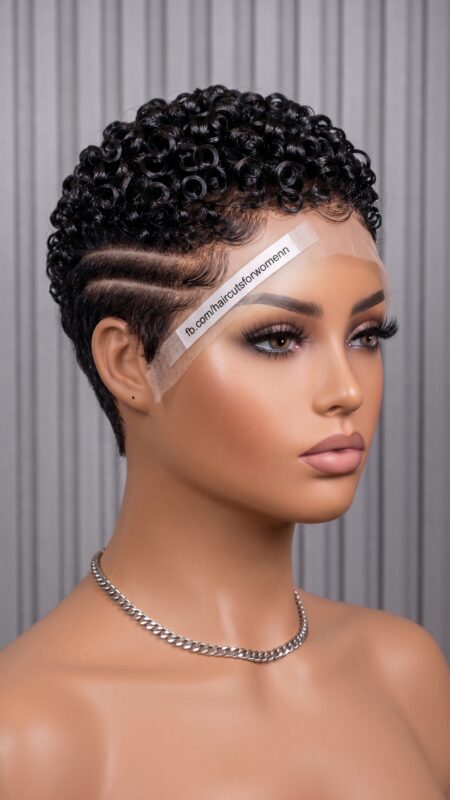
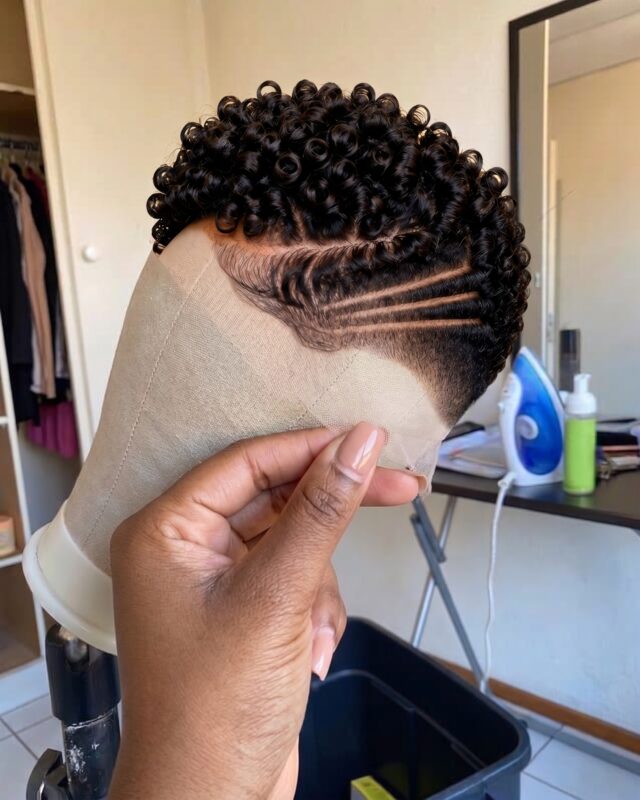
This style is a good example. The upper section is packed with glossy black ringlets, while the front and temple area gradually changes into sculpted finger waves. The side is cut much shorter and includes a subtle line design. Instead of allowing all of these elements to compete with one another, the hairstyle uses the temple as a transition zone.
That transition is important whether you are buying a finished pixie wig, ordering a custom unit, or asking a stylist to recreate the hairstyle. If the curls stop too suddenly, the top can look disconnected from the sides. If too much curl density is carried into the temple, the beautiful wave work can disappear.
Here is what to inspect before ordering a similar style and how to find a wig maker or stylist capable of recreating it.
Where To Buy A Short Curly Pixie Wig Like This
Custom wig makers. A custom maker is usually the best starting point when you want the complete combination shown here: compact ringlets, short sides, sculpted temple waves, and a controlled transition between them. Send several reference angles and specifically mention that you want the crown-to-temple shape preserved.
Local wig boutiques. Shopping in person lets you inspect the pixie from the front, side, and above. This is useful because curl density can look very different once the wig is actually positioned on a head.
Instagram and TikTok wig sellers. Search for sellers who regularly make short curly units rather than shops that mainly sell long straight or body-wave wigs. Short pixies require a different type of cutting and finishing.
Etsy wig makers. Independent makers can be useful when you need custom cap measurements, curl placement, lace color, or a specific side shape. Check recent buyer photos before ordering.
Online wig stores. Search stores for curly pixie wigs, short human-hair wigs, finger-wave pixies, and short ringlet wigs. If the stock unit has the correct basic structure, a local stylist may be able to customize it further.
Marketplaces. Amazon, AliExpress, Temu, and similar platforms may have inexpensive versions. Look carefully at customer photographs because listing images do not always show the exact density, lace quality, or temple construction you will receive.
Salon-made wigs. Another option is buying a basic short human-hair unit and having a stylist reshape it. This can be especially useful if you find the right curls but dislike the factory side styling.
Wholesale vendors. Wig sellers purchasing multiple units should order a sample first. Short pixies are sensitive to small differences in cutting, curl direction, density, and hair placement.
Order inquiries: WhatsApp [WhatsApp: +XX XXX XXX XX XX]
How Much Can A Curly Pixie Wig Cost?
The price depends on whether the unit uses human hair or synthetic fibre, the lace construction, cap quality, density, curl preparation, customization, and the amount of hand finishing required.
Premium Custom Human Hair: approximately $260–$500+. Expect higher-grade hair, customized measurements, better lace options, detailed curl placement, and more individual styling around the temple and perimeter.
Standard Custom Human Hair: approximately $180–$340. This range can offer a strong balance between hair quality and detailed customization.
Basic Human Hair: approximately $120–$240. These wigs may have simpler cap construction or require additional salon work after purchase.
Premium Synthetic: approximately $65–$160. Quality synthetic fibres can hold small ringlets extremely well and may be practical for buyers who want the curl pattern to stay consistent.
Basic Synthetic: approximately $25–$80. These can reproduce the general silhouette at a lower price, although lace, fibre movement, and customization may be more limited.
Installation, shipping, customs charges, lace preparation, bleaching knots, additional cutting, and professional restyling can increase the final cost.
The Crown And Temple Have Different Jobs
The crown provides most of the volume in this hairstyle.
It contains numerous compact ringlets placed close together. That density gives the pixie its rounded upper silhouette and prevents the hairstyle from looking flat.
The temple has almost the opposite job.
Instead of creating volume, it creates direction and shape. The hair becomes flatter, allowing the waves and side details to remain visible.
A successful pixie needs both sections.
The Curls Should Not Stop Like A Hard Wall
One common problem with short curly wigs is an abrupt density change.
Imagine a very dense curly crown ending at one exact horizontal line with extremely short hair immediately underneath. Unless the haircut was intentionally designed that way, the result can look disconnected.
A more natural transition usually introduces slightly smaller or flatter curls as the style approaches the temple.
This creates a visual bridge between the full crown and the short side.
Watch The First Row Of Curls Above The Temple
When evaluating a pixie wig, pay special attention to the curls directly above the temple waves.
They should not be so large that they completely cover the wave work.
At the same time, they should not be so sparse that an empty-looking gap appears between the crown and temple.
This narrow section can tell you a lot about the quality of the styling.
Curl Density Should Gradually Reduce Toward The Side
The highest point of the crown can carry considerable density because it has enough space to support it.
Moving toward the side, that density often needs to decrease.
This does not necessarily mean removing large amounts of hair. A stylist can also control apparent density through curl size, direction, cutting, and placement.
The goal is to avoid a heavy mushroom-like ledge above the short side.
Curl Direction Is Just As Important As Curl Size
Two wigs can use curls of almost identical diameter but still have completely different silhouettes.
The reason is direction.
Curls positioned upward create more height. Curls directed outward create width. Curls positioned slightly downward can help connect the crown with the temple.
For this style, the outer curls should support the transition rather than pushing aggressively away from the head.
The Temple Waves Need Their Own Space
The sculpted waves around the front and temple are one of the strongest details of this pixie.
They need visible surface area.
If the ringlets extend too far forward or downward, the waves become partially hidden. The hairstyle then loses one of the elements that separates it from an ordinary curly pixie.
When ordering custom, tell the maker that the frontal and temple waves must remain clearly visible after the wig is fitted.
Do Not Overload The Front Hairline
Adding more hair does not automatically make a pixie look more expensive.
Too much density at the front can create a thick border and make the curls sit unnaturally high above the forehead.
A short style usually benefits from more controlled density near the perimeter and greater fullness farther into the crown.
This also makes the transition into finger waves easier to create.
The Finger Waves Should Connect With The Ringlets
The waves and ringlets should not look like two completely separate hairstyles placed next to each other.
Look closely at the area where the last curls meet the first sculpted wave.
A skilled stylist uses direction to make the eye travel naturally from one texture pattern into the other.
This is particularly important near the front-side corner, where the transition is most visible.
Why Human Hair Can Be Useful For This Style
Human hair provides flexibility if you plan to change the shape later.
A stylist can wet the hair, reset selected curls, flatten a section, rebuild the temple waves, or adjust the crown.
This makes a human-hair unit particularly useful for buyers who want professional salon maintenance.
Ask the seller whether the curls shown in the product photograph are permanently processed or manually set, because this affects what happens after washing.
Synthetic Ringlets Can Hold Their Shape Well
A synthetic pixie can also work beautifully.
In fact, synthetic fibre may retain compact ringlets with less daily styling than some human-hair units.
The limitation is customization.
Heat tolerance varies, and extensive restyling may be more difficult. Check the fibre specifications before using hot tools or attempting to reshape the temple.
Ask What Happens After The First Wash
This is one of the most useful questions you can ask a seller.
A wig may arrive with perfectly sculpted curls because it has been professionally set immediately before photography.
After washing, the pattern may loosen considerably.
Ask whether the ringlets naturally return after washing or whether they need to be reset manually.
Also ask whether the finger waves need gel, mousse, wrapping, or heat to recreate their original shape.
The Short Side Must Support The Transition
The short side underneath the curls creates contrast.
If it remains too long, the upper crown can lose its visual separation. If it is taken excessively short, the transition may become harsh.
The exact length depends on the wig construction and desired result.
This is another reason why a stylist experienced with pixie wigs can be more useful than someone who mainly installs long lace units.
The Side Lines Should Remain Secondary
The carved side details add personality, but they do not need to dominate this particular hairstyle.
The ringlets and sculpted temple are already visually strong.
A restrained line design keeps the side interesting without competing with the crown.
When customizing a similar wig, decide which feature should receive the most attention before adding extra side details.
Check The Silhouette From Above
Most buyers inspect the front and sides but forget the top view.
The top view can reveal uneven curl distribution immediately.
One side may have considerably more volume than the other, or the crown may contain an empty area that is hidden from a normal frontal photograph.
Ask the seller for a short video showing the wig from slightly above.
Check The Back Transition Too
The same principle applies behind the ears and toward the nape.
A beautiful front does not guarantee a well-shaped back.
The crown should gradually connect with the shorter rear section without creating an obvious shelf of curls.
For online orders, request front, side, rear, and top views whenever possible.
Cap Size Changes Where The Transition Sits
Correct cap measurements are especially important on a short hairstyle.
If the cap is too large, the side can sit lower than intended. If it is too tight, the unit may pull upward and change where the curls meet the temple.
Measure your head circumference, front-to-nape length, ear-to-ear measurement, and temple area according to the maker’s instructions.
Do not assume that adjustable straps can correct every sizing problem.
Ask About The Lace
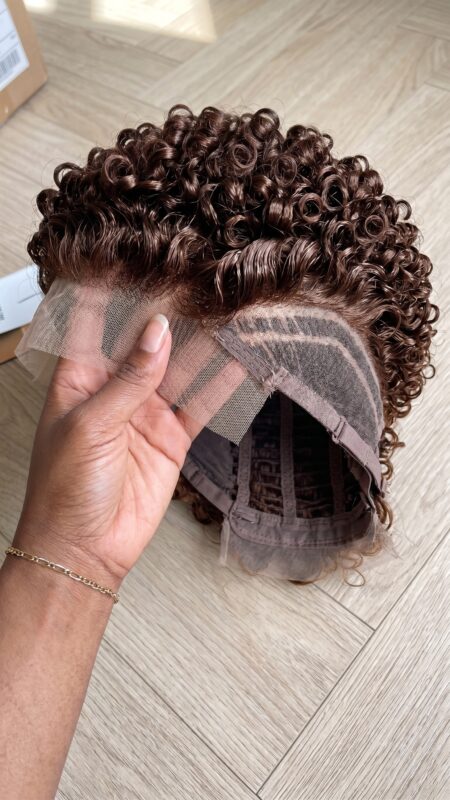
If you want a realistic frontal result, ask whether the wig uses HD lace, Swiss lace, or another lace type.
Also ask about lace color and knot size.
Bleached knots can help reduce the appearance of dark dots along the hairline, although bleaching must be performed carefully to avoid weakening the hair.
For a glueless unit, ask whether the cap includes an adjustable elastic band, combs, clips, or other security features.
How To Book A Stylist For This Look
If you already own the wig but need it shaped professionally, search locally for a pixie wig stylist, short hair specialist, finger wave stylist, or a barber who has experience working with wigs.
Do not book based only on photographs of long lace-front installations.
Look for previous short cuts in the stylist’s portfolio.
Send your reference image before making the appointment and ask whether the stylist can work on the crown, temple waves, short sides, and lace without damaging the cap.
Appointments can usually be requested by phone, WhatsApp, Instagram DM, or the salon’s online booking system.
What To Tell Your Wig Maker
A vague request such as “I want a curly pixie” leaves too much open to interpretation.
Explain the important details individually.
For example, request a compact ringlet crown with controlled volume, reduced density toward the sides, sculpted waves through the frontal and temple area, short sides, and a gradual connection between the curls and waves.
If you want side lines, provide a separate side reference showing their placement.
Before You Pay
- Is the wig human hair or synthetic?
- Are the ringlets permanently processed or manually set?
- What happens to the curl pattern after washing?
- Can you show the exact unit from the side and above?
- Can the temple waves be customized?
- What lace type and cap construction are used?
- Can you adjust the crown density to my preference?
- Does the wig arrive fully styled and ready to wear?
How To Maintain The Crown-To-Temple Shape
Avoid treating the entire wig as one uniform section during maintenance.
The crown and temple need different handling.
For the ringlets, separate and reshape individual curls rather than aggressively brushing through the entire crown. Heavy brushing can destroy the compact pattern and create unnecessary volume.
Around the temple, use a small amount of suitable mousse or styling product to restore the wave direction. Work in small sections so the waves remain visible.
Do not saturate the perimeter with heavy oils. Product buildup can flatten the waves and make the lace more noticeable.
Store The Wig Without Crushing The Outer Curls
Short does not mean maintenance-free.
If the wig is pushed into a drawer or stored under other units, the outer ringlets can become compressed. Because those curls form the transition into the sides, uneven compression can alter the entire silhouette.
Use an appropriate wig stand or mannequin head when possible and keep the crown free from pressure.
Search Terms
short curly pixie wig · curly pixie wig for black women · ringlet pixie wig · finger wave curly pixie · short human hair curly wig · curly pixie with shaved sides · black ringlet pixie wig · glueless curly pixie wig · short curly lace wig · pixie wig with finger waves · sculpted curl pixie wig · curly pixie wig with side design
Final Thoughts
The most impressive part of a short curly pixie is not always the feature that attracts attention first.
The ringlets may be what you notice immediately, but the transition underneath them determines whether the entire haircut feels connected.
A strong crown-to-temple transition gradually reduces visual weight, preserves enough room for the sculpted waves, and connects the full upper section with the shorter sides without creating a hard shelf.
When buying a similar wig online, do not judge it only by curl beauty. Request side and top views. Examine the first row of curls above the temple. Check whether the waves remain visible and whether the crown appears balanced from every angle.
If you are ordering custom, communicate these details before production begins. Curl size, density, direction, temple placement, cap size, and side length all influence the final result.
A well-made pixie is ultimately about proportion. When the crown carries the volume and the temple controls the direction, both areas can stand out without fighting for attention.