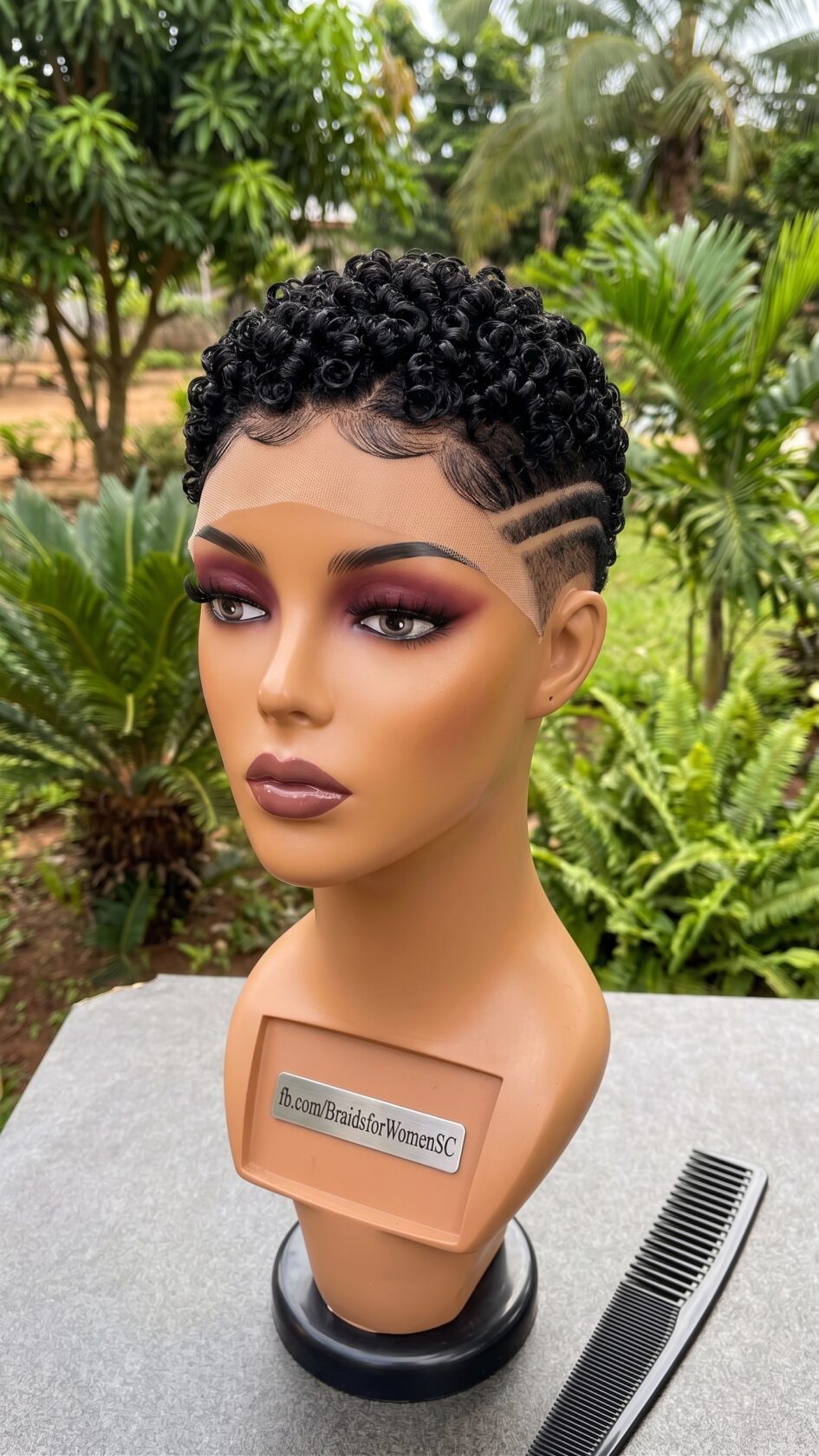
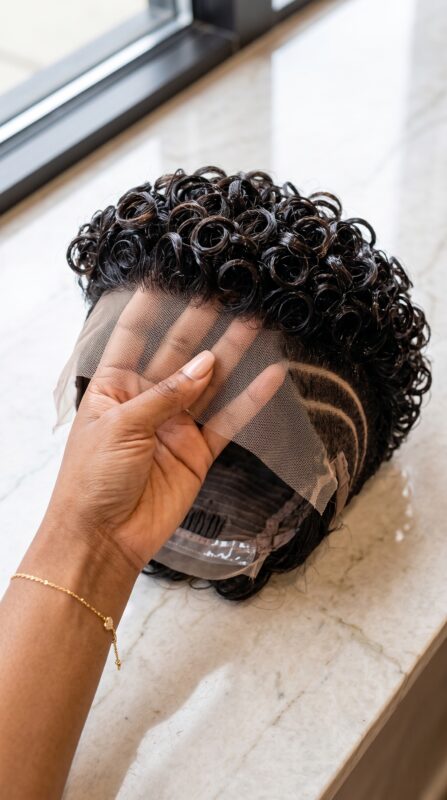
A display bust, not a full mannequin head. Tight glossy ringlets across the crown. Temple lines carved clean and sharp. A comb sitting beside the wig on the table, showing what comes in the box. Outdoor garden background, natural light.
This presentation style is becoming more common, and it has its own advantages and blind spots compared to a full-head display or a worn photo. Understanding what each type of photo can actually tell you is how you learn to read a listing truthfully instead of just reading what looks pretty.
What A Bust Display Actually Shows Well
A bust form is cleaner and more editorial than a full mannequin head — the face is proportioned without the plastic body, which gives you a clear look at the silhouette and the crown volume without the distraction of a full figure. You can judge the curl shape, the line design, and how the piece sits at the very front and crown clearly.
It is also honest in a way a full head sometimes is not. A full mannequin head’s face, hair, and plastic body all work together to create an overall vibe that can be flattering or unflattering; a bust form is more neutral, just showing the hair and the top surface.
And if there is a comb, a strap, or another piece of hardware sitting visible in the photo, you know upfront what comes in the box and what the maker considers important enough to highlight.
What A Bust Display Cannot Show
Lace tone cannot be judged against a bust’s plastic neck and shoulder — plastic is not skin, and tan plastic in particular looks deceivingly close to a wide range of real skin tones. A lace that reads as matching perfectly against plastic may sit obviously on your actual forehead. This is exactly why you need to ask for a photo of the lace against real skin or see it worn on a person before you order.
Fit and how the piece sits on a real human head cannot be judged from a static form. The cap may be the right circumference but sit forward, backward, or awkwardly once on an actual head with actual contours.
Hair bounce and movement cannot be shown. A still photo of tight curls on a bust form looks springy; a video of the same curls being touched, moved, or styled can look very different.
And density evenness across the whole crown is harder to judge from a bust angle — you are not seeing the piece from above, behind, or in the round the way you would with a full head or a worn photo.
Comparing All The Display Contexts
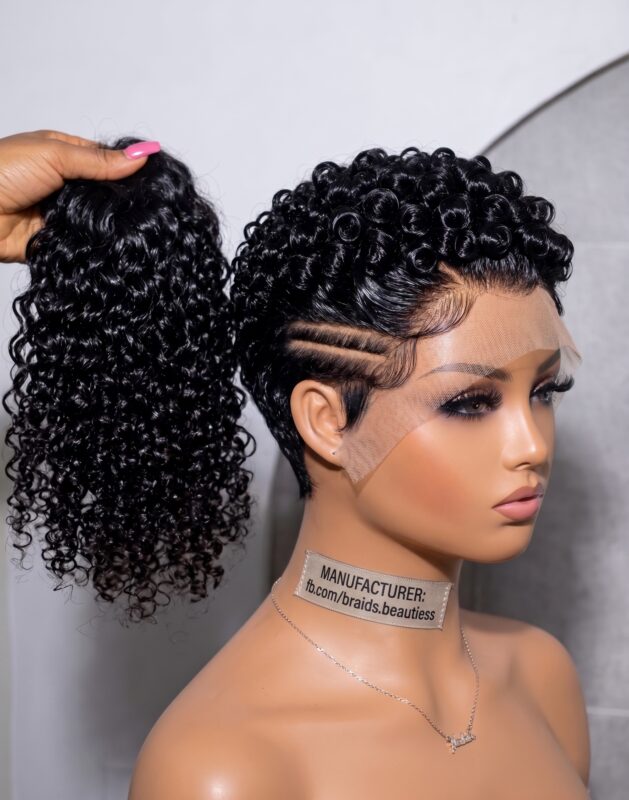
A full display mannequin head shows silhouette and styling well but can flatter unfairly; it is hardest to judge fit and lace tone.
A bust form is clean and editorial but provides even less information about how the piece will sit on a real head; lace tone is still impossible to judge.
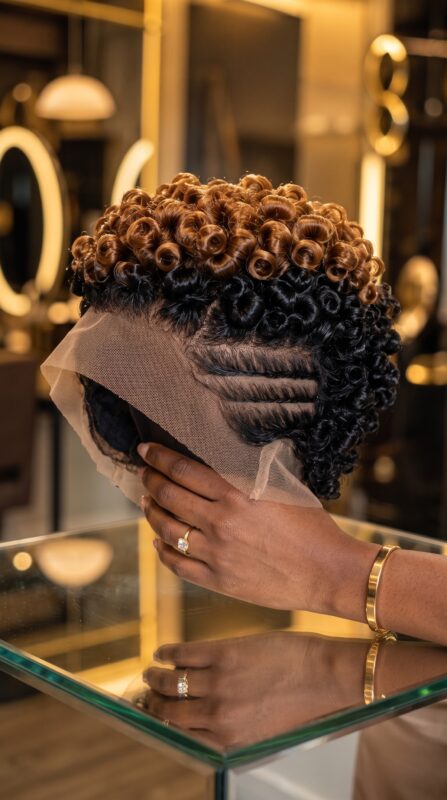
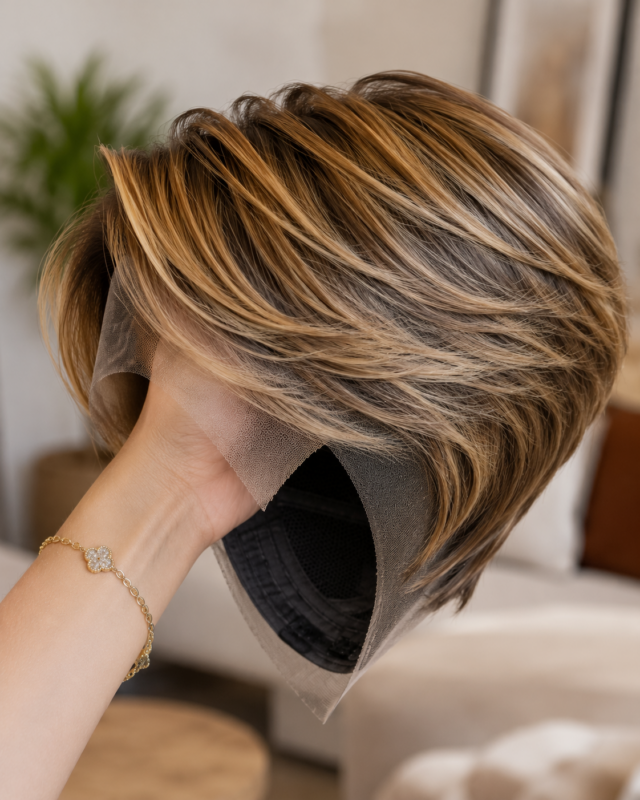
A held unit on someone’s hand shows the lace, the cap, and construction details best; it cannot show how the style looks when worn.
A worn photo on a real person shows fit and silhouette on an actual head but can be stylised or lit to flatter; it may not show cap details.
A block-mounted unit is what stylists use for actual construction; it shows hand-tied work and lace details clearly but cannot show fit on a real head.
No single photo type tells you everything. A listing with photos from multiple contexts — bust, held, and worn — is actually better than a listing with multiple angles of just one context, because each context answers different questions.
What To Ask When You See A Bust-Form Photo
Since a bust display hides lace tone and fit information, ask directly:
- “Can you send a photo of the lace against real skin or on a real person’s head so I can judge tone matching?”
- “Can you show me how this piece sits on someone’s head, not just on a display form?”
- “Can you send a video of the curls being touched or moved, so I can see how they bounce?”
A maker who has done any amount of real-world testing will have these photos or videos and will send them without hesitation.
The Tight Ringlets And Carved Lines
Even from a bust form, you can judge the curl shape — these are small, tight, individually defined ringlets with good shine and separation. You can judge the carved lines on evenness and consistency, and the small temple detail on cleanness.
What you cannot judge is whether the curl density holds all the way to the lace, or if it thins at the edges. A full-head or held-unit photo would show that.
The Included Hardware
A comb sitting in the photo shows this is a glueless cap unit. If a maker bothers to show you the hardware that comes in the box, they are signalling confidence in the construction. But asking directly — is the cap glueless with combs and an adjustable strap, is it built to measurement — is still necessary, because a photo of a comb could just be a styling prop rather than proof of what the actual cap contains.
Before You Buy
Can you send a photo of the lace on real skin or on a real person’s head?
Can you show me the piece on an actual head, not just a display form?
Can you send a short video of the curls being touched or styled?
Is the cap glueless with combs and an adjustable strap, and can it be built to my head measurement?
What other display contexts can you show me — held, worn, from multiple angles?
Search Terms
curly pixie wig multiple display photos · lace tone matched curly pixie wig · HD lace pixie on real head · tight coil pixie wig human hair · where to buy curly pixie wigs with honest photos
Final Thoughts
Study the photo contexts as much as the wigs themselves. A bust-form display is professional and clean, but it is also one of the least informative contexts for actually judging how a piece will look and fit on you.
A comprehensive listing shows the piece in several contexts — held, worn, displayed — because each one tells a different part of the story. If a maker only ever posts bust forms or only ever posts on heads, ask yourself what they might be avoiding showing you.
Ask for the photos that matter to your specific concerns before you order. Decide honestly, then buy accordingly.