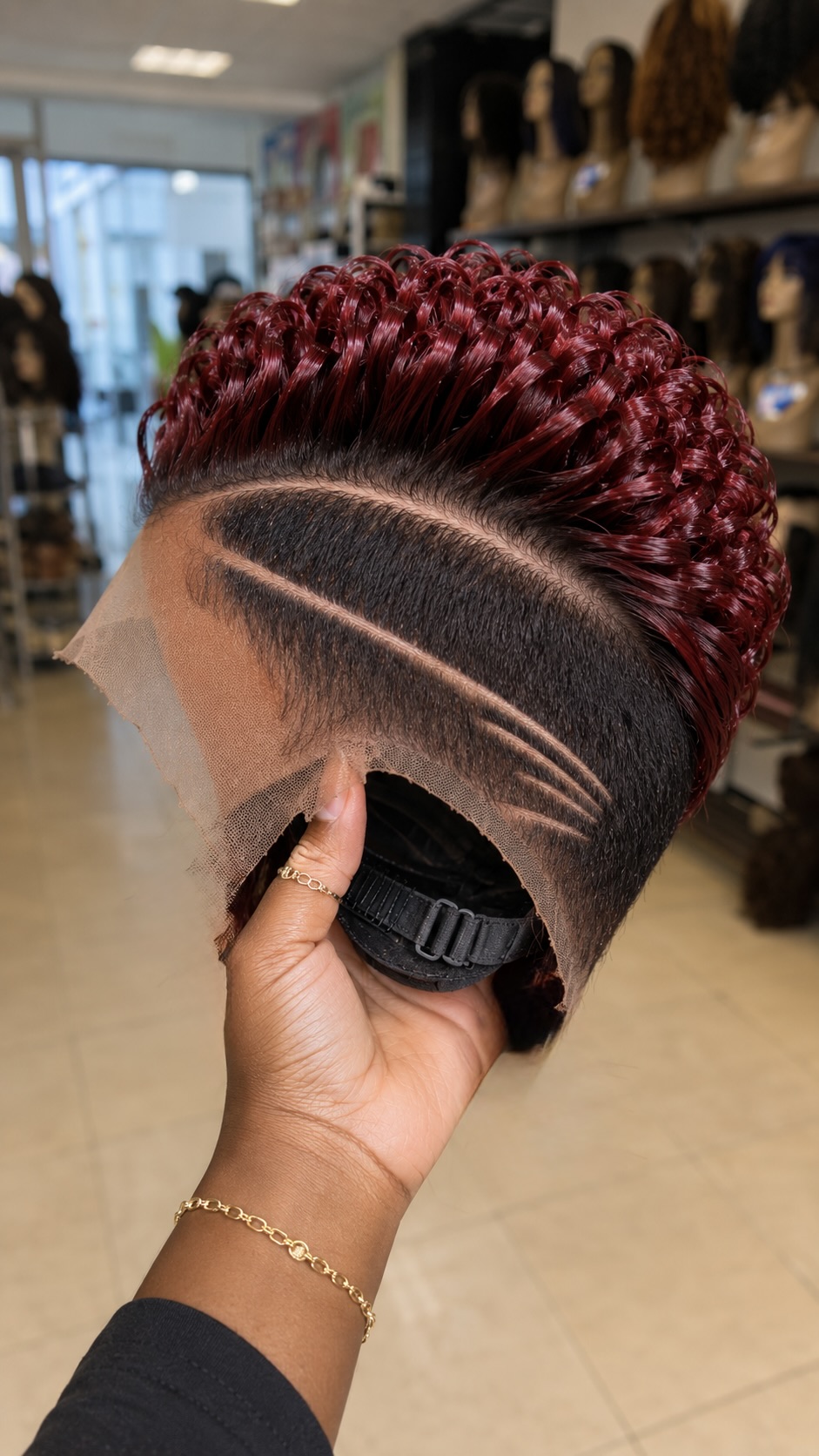
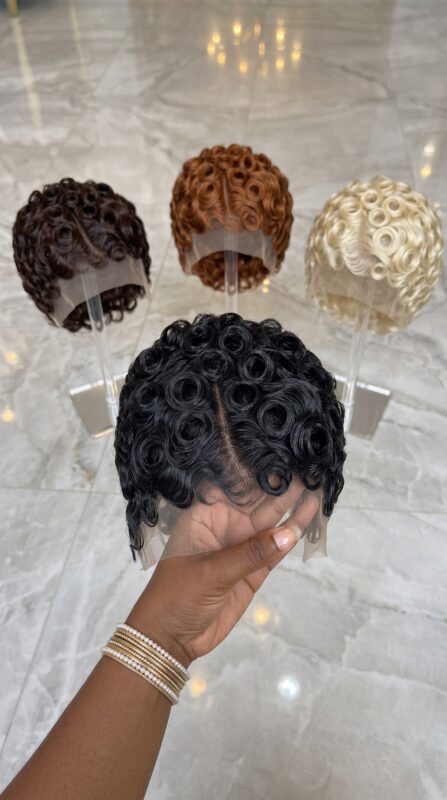
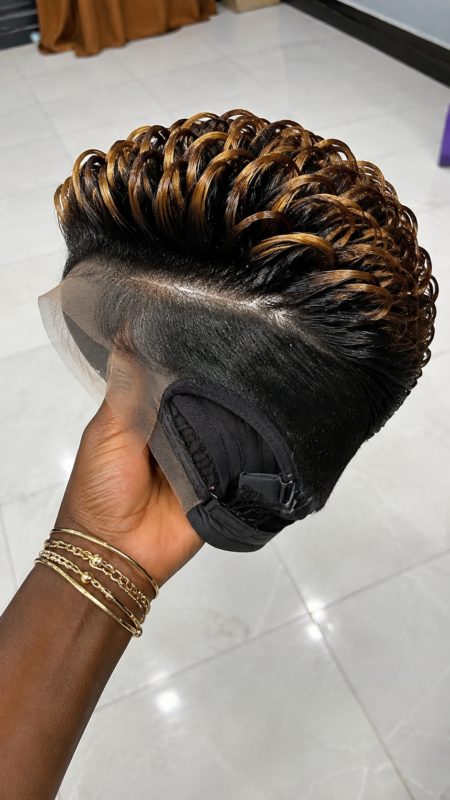
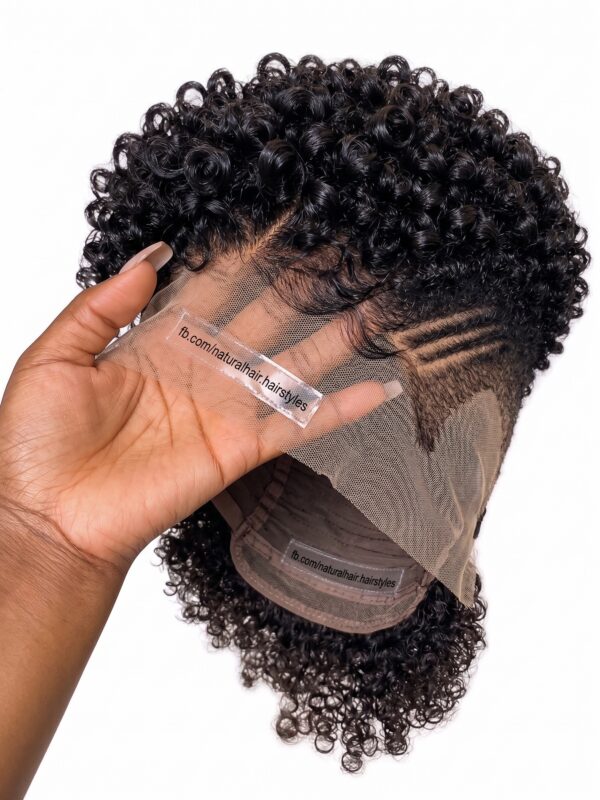
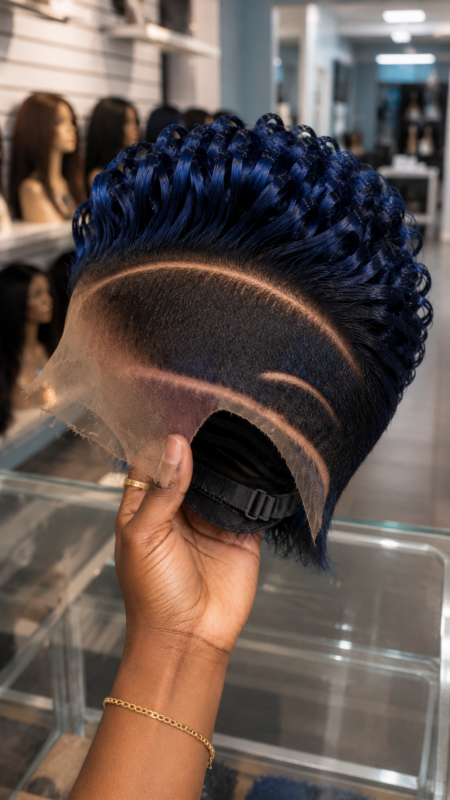
A unit in a product photo and the same unit on a head can look like two different wigs. This burgundy pixie is a good example: held up, you see lace, knots, and a curl pattern; worn, you see how it sits at the hairline, how the sides taper into the face, and how the whole shape frames the person. Those are not the same information, and the second kind is the one that decides whether you like it. So the single most useful thing before buying is to see a unit worn, not just in the hand.
Why The Worn Shot Matters More
An in-hand shot shows construction. A worn shot shows fit, proportion, and how the style falls, which is what you actually live with. A curl that looks tight in the hand relaxes on a head. A hairline that looks clean flat can pull or lift once it is on. A shape that looks bold held up can overwhelm or flatter depending on the face. None of that shows until it is worn, which is why a beautiful product photo tells you surprisingly little about how a unit will look on you.
What To Look For When It Is Worn
Check the hairline first: it should melt into the skin, not sit as a line. Check how the sides and nape frame the face, since a short unit shows its whole shape. Watch how the curl or style falls with gravity rather than posed in a hand. And look at the colour in the worn light, because a shade like burgundy reads dark indoors and flares red in the sun. If a seller only ever shows in-hand shots, ask for a worn one, and treat the absence of any as a reason to be cautious.
Where To Buy
Prioritise sellers who show units worn, on real people, in normal light: custom makers, Instagram and TikTok sellers with try-on video, and local shops where you can put it on yourself. Marketplaces and wholesalers usually show only product shots, so lean on reviews with buyer photos to see the unit worn. Wherever you buy, vet the seller the usual way, check the account, look for genuine buyer images, ask a plain question and time the reply, and keep the WhatsApp line for order questions: [WhatsApp: +XX XXX XXX XX XX].
What It Costs
A styled burgundy pixie in human hair runs roughly $200 to $430, with the colour adding around $55 to $115 over black; good synthetic burgundy holds its deep tone for $60 to $150. Shipping and any customs sit on top and depend on where you live. The running cost with burgundy is colour: red fades faster than any shade, so plan to refresh a human unit with a colour-depositing conditioner, or choose synthetic to hold the depth with less effort. The bigger point on cost is not to pay full price on an in-hand photo alone, since a unit that looks great held up can disappoint worn.
Before You Pay
- Have I seen this unit worn, on a head, in normal light?
- Does the hairline melt in, or sit as a line?
- Does the shape frame the face, or overwhelm it?
- Is the burgundy rich worn, both indoors and in sun?
- If only in-hand shots exist, why?
Trimming The Lace
Cut the front lace in small offset steps, leaving a shallow margin rather than cutting flush, in daylight where the burgundy reads true. If it is your first lace unit, let a stylist make the first pass, since the worn result depends on a clean hairline.
Final Thoughts
The photo that sells a unit is usually the one taken in the hand, but the photo that tells the truth is the one taken on a head. In-hand shows you how it is built; worn shows you how it looks, fits, and falls, which is what you are really buying. Before you commit to this burgundy or any unit, find a worn shot, judge the hairline, the shape, and the colour in real light, and only then decide. A unit is not how it looks held up. It is how it looks on you.