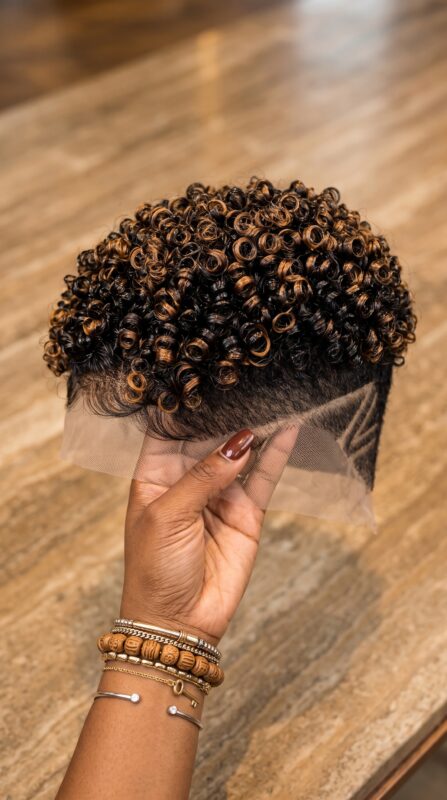
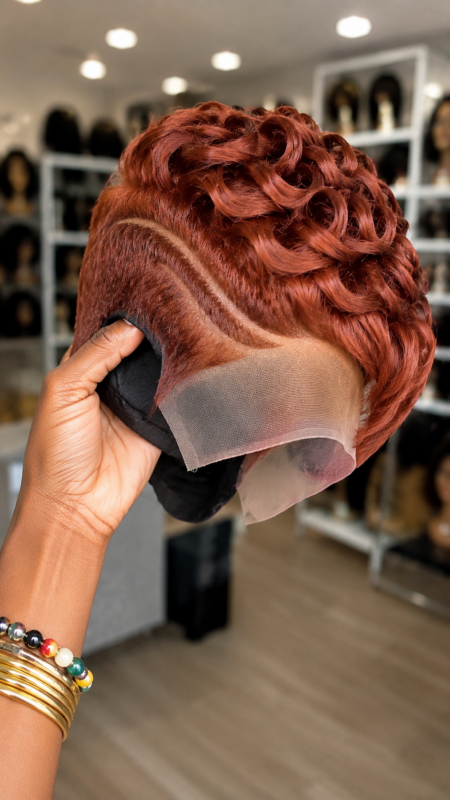
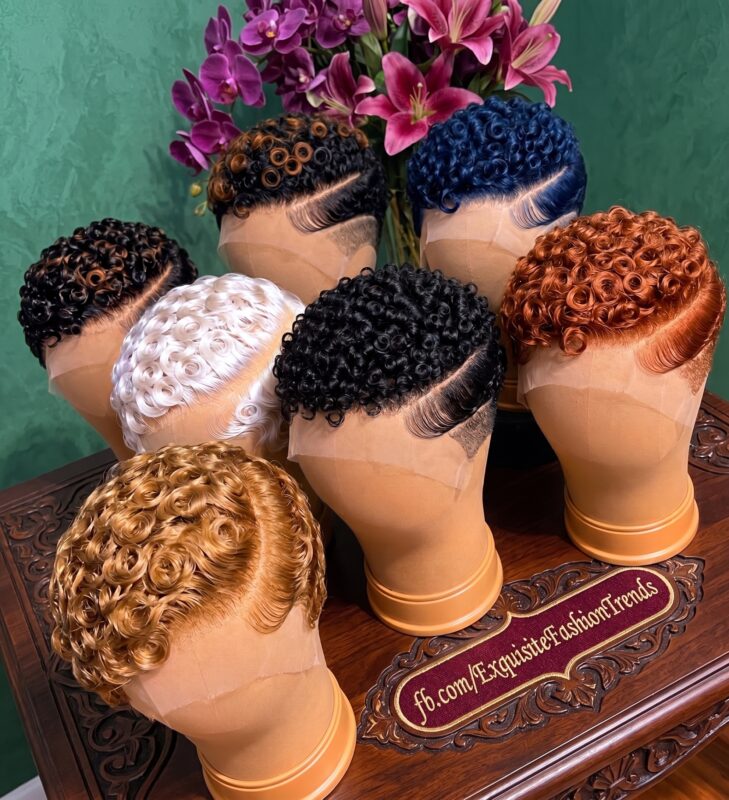
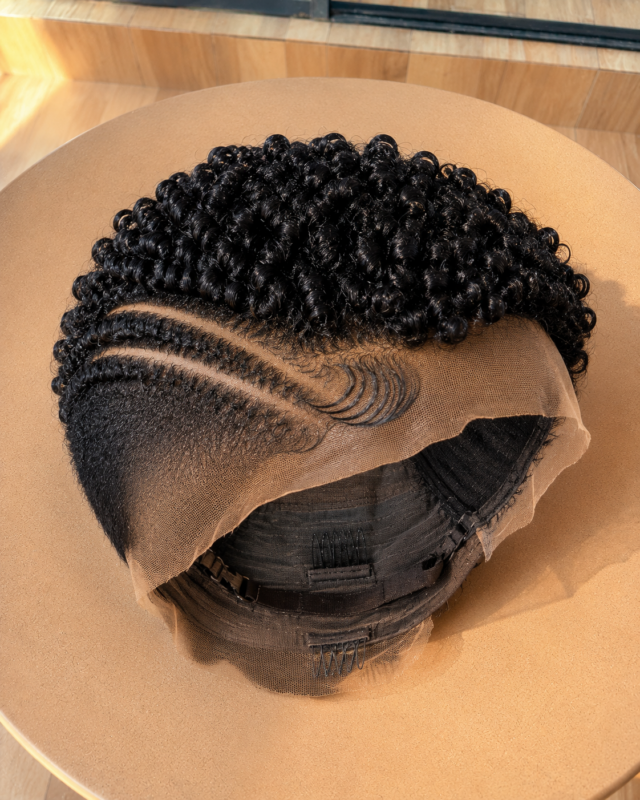
On a short curly pixie wig, most buyers look at the ringlets, the parting line, and the lace first. Those details matter, but on a unit like this, another feature is quietly doing a lot of work underneath: the front combs.
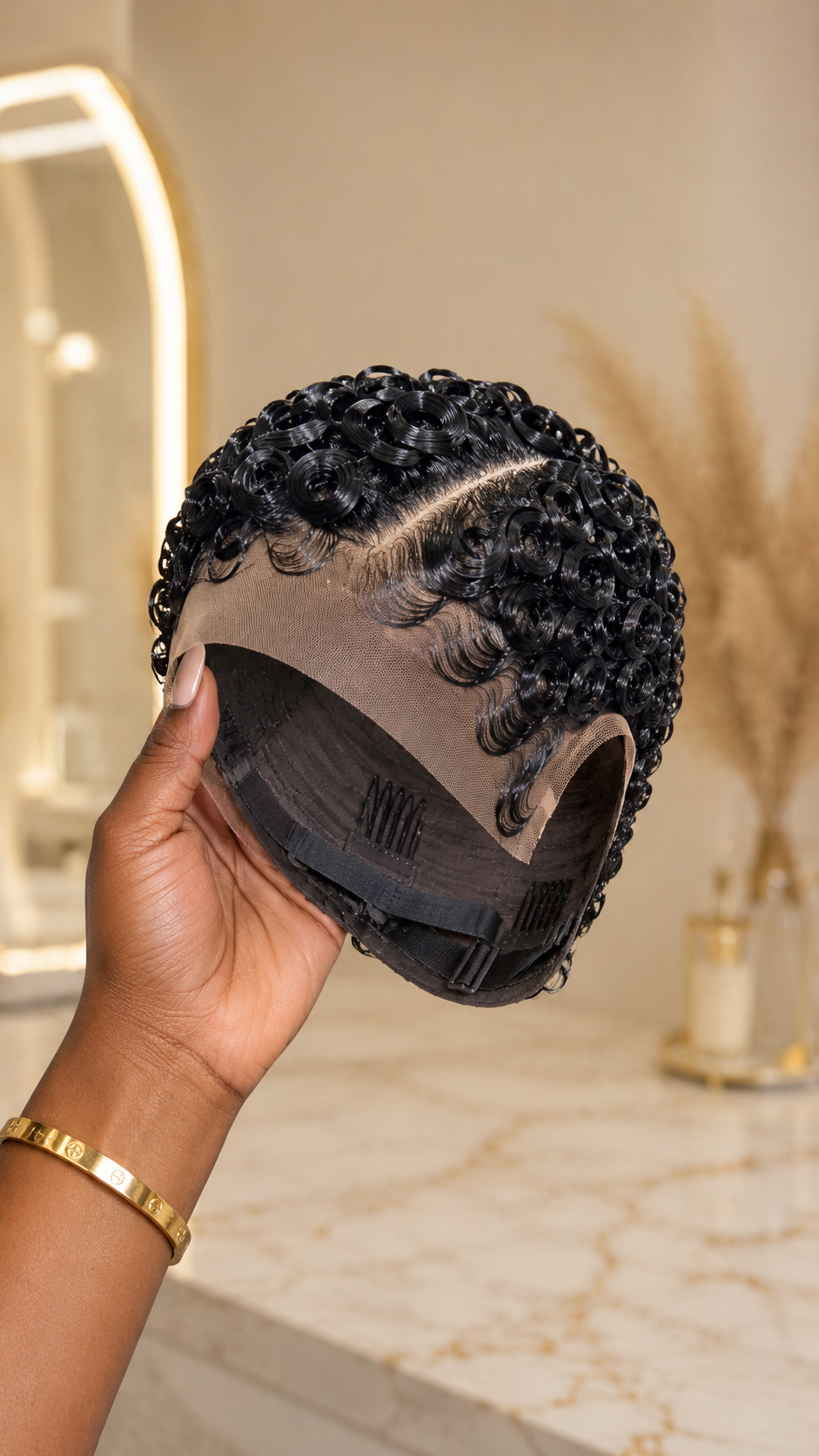
This image shows the inside of the wig clearly enough to see how the combs sit behind the lace front, how the strap runs across the back, and how the cap is meant to secure a compact, glueless pixie shape. That makes it useful for a buying question many people skip: are the front combs helping the wig sit flatter, or are they positioned in a way that can create tension, lift, or discomfort? On a short wig, that question matters more than people think because there is very little extra hair to hide a hairline problem once the unit is on the head.
Where To Buy A Curly Pixie Wig With A Good Comb Layout
Custom wig makers. Custom makers are often the best option when fit details matter. Ask not only whether the wig has combs, but where they are positioned, how many there are, and whether they are intended for glueless wear or optional extra security.
Instagram and TikTok sellers. Social sellers often focus on the finished style from above. Ask for an inside-cap photo or video that shows the comb layout clearly. On a short wig, comb placement matters more than on a long unit because the front and sides are more exposed.
Etsy. Independent makers may offer better cap customization, especially if you need a certain size or want the combs moved, reduced, or removed. Read descriptions carefully because “glueless” does not always mean the same construction from seller to seller.
Marketplaces like Amazon, AliExpress, and Temu. These can offer visually attractive pixie wigs at lower prices, but the cap mechanics vary widely. Buyer photos are useful because they may show whether the combs sit too close to the lace or whether the wig looks lifted at the front when worn.
Local beauty supply shops and salons. Local shopping can be especially useful for short wigs because you may be able to inspect the comb placement directly and judge whether the front section feels practical for your own head and hair underneath.
Vendors and wholesalers direct. If you buy direct, ask for the cap specification: lace dimensions, cap size, number of combs, comb locations, strap type, and whether the combs are sewn into rigid or flexible points of the cap.
Regionally. Wig makers in Lagos, Accra, Atlanta, London, and major South African hair markets often understand glueless pixie demand, but terminology still varies. Use photos and clear follow-up questions instead of relying only on the listing title.
Vet the seller. Favor sellers who show top view, side view, inside-cap construction, and videos of the wig being handled without glue. A seller who shows the mechanics usually understands that short wigs are judged on fit as much as style.
Red flags. Be cautious if the listing never shows the inside cap, if the combs appear stitched directly too close to the lace front, if the seller says “just tighten it” for every fit issue, or if customers complain that the front lifts during wear.
When you order, send. Provide your head circumference, whether you wear a wig cap underneath, whether you want glueless wear, and whether you prefer maximum grip or a softer, flatter front fit.
Contact / order inquiries: WhatsApp [WhatsApp: +XX XXX XXX XX XX]
How Much It Costs
Premium human hair. A well-made black human-hair curly pixie with a refined cap, good lace, and thoughtfully placed combs can commonly range from about $250–$430.
Standard human hair. Around $180–$300 can buy a strong short curly unit with decent cap mechanics. At this level, the difference often comes from the quality of the lace and how intelligently the grip system is arranged.
Basic human hair. Lower-priced human-hair wigs may still look beautiful from the outside, but may use simpler cap construction, more generic comb placement, or less careful finishing behind the lace front.
Good synthetic. Around $60–$150 can buy a visually appealing curly pixie, especially if the preset curls are attractive. But synthetic units can still fail at the front if the comb placement creates tension or the cap fit is generic.
Basic synthetic. Around $25–$70 is common for budget pieces. At that level, comb placement is more likely to follow a one-size-fits-most cap rather than a carefully balanced fit design.
What the price may include or exclude. Ask whether custom cap sizing, lace tinting, comb removal, strap replacement, repositioned anchors, carved side work, and first-time fitting advice are included or added separately.
Shipping and duty. International orders may become significantly more expensive after delivery charges, customs fees, and local taxes. Compare the landed cost, not only the listing price.
Ongoing costs. Combs themselves are inexpensive, but if a comb is badly positioned and keeps pulling the cap or irritating the front, repositioning it usually requires sewing work from a stylist or wig maker.
First-year total. Include washing products, lace care, curl refresh products, and any cap adjustments if you need to modify the comb layout for more comfortable wear.
Cost per wear. A wig that sits correctly without constant adjusting usually delivers better value than one that is cheaper but keeps shifting or lifting at the front.
What a very low price may signal. It can mean more generic cap sizing, less thoughtful comb placement, simpler stitching, rougher lace work, or a construction that expects the wearer to tolerate unnecessary front tension.
Deposit structure. Custom orders often require around 30–50% upfront, with the balance due before shipping. If cap mechanics matter to you, keep your requested details in writing.
Shipping, Delivery, And What To Expect After Ordering
When the wig arrives, inspect the inside cap before trimming the lace. Check where the front combs are sewn, whether they sit symmetrically, and how close they are to the frontal lace area.
Place the wig on your head or a mannequin and test the fit in stages. First evaluate the wig with the combs unused. Then try the combs and compare how the front, temples, and parting line behave. This helps you see whether the combs are actually improving the fit or simply adding tension.
Photograph the inside construction while the wig is still in its original state. If the comb placement proves impractical, you want evidence before making alterations or trimming anything.
Front Combs Are Not Automatically A Good Thing
Many buyers treat combs as a bonus feature. More security sounds better, so more hardware seems better too. But a front comb is only helpful if it works with the cap size, lace position, and your own hair underneath.
A well-placed front comb can help anchor the cap and reduce shifting. A badly placed one can create a very different result. It can pull the wig slightly backward, create lift in the lace front, make the temples sit oddly, or make a glueless unit feel more rigid than necessary.
That is why comb placement should be judged as part of the architecture of the wig, not as a simple extra.
Comb Position Changes How The Hairline Behaves
On a short pixie wig, the hairline is visually important because it is not hidden by long fringe or extra volume. If the front combs sit too close to the lace front, their grip may change the way the front edge lies against the head.
Instead of the lace melting smoothly, the front may begin to rise slightly or look tense. In some cases, the buyer thinks the lace is poor quality or the hairline is badly customized, when the deeper issue is really the way the comb is pulling the cap from behind.
A good test is to compare the wig lying naturally versus the wig secured with the combs. The basic shape of the front should remain stable. The combs should support the fit, not redesign the front.
Short Wigs Reveal Comb Problems Faster Than Long Wigs
Long wigs can hide a lot. Extra length and movement can soften the signs of mild tension or minor cap distortion. A short pixie cannot. The front, sides, and perimeter are all more exposed, so even a small shift in fit becomes visible more quickly.
That makes the front combs a more important buying detail on a pixie wig than on many longer styles. If they pull too hard, sit too high, or create uneven force, the top curls may still look pretty while the front fit quietly gives the whole wig away.
In other words, the shorter the style, the less room there is for a poorly placed comb to hide.
Glueless Does Not Mean You Must Use Every Grip Feature
Another mistake buyers make is assuming that if a wig comes with combs, they must always be used. That is not necessarily true.
Some wigs wear better when the strap and correct cap size do most of the work, with the combs used only as optional extra security. For some wearers, especially those who want a softer front or have a smooth wig-cap base underneath, the combs may add more tension than benefit.
The best glueless system is not the one with the most hardware. It is the one that lets the wig sit securely with the least distortion.
Comb Placement Should Match The Type Of Wearer
Not every wearer needs the same layout. A person with natural hair underneath may use combs differently from someone with a very flat braided base. A wearer who prefers all-day security may welcome a firmer hold, while someone focused on a softer hairline may want a gentler front.
That is why a good cap is not only about style. It is also about matching the grip system to the real wearer. A comb layout that works beautifully for one customer may feel awkward or unnecessary for another.
This is one of the reasons custom wig makers often outperform generic listings when short styles are involved.
The Parting Line Depends On Stability Too
This image also shows a visible parting line near the top. That detail matters because a part looks most convincing when the wig is sitting where it was meant to sit.
If the front combs distort the cap, the part may shift, narrow, or stop looking as scalp-like as it did in the listing photo. Buyers sometimes blame the part construction, but cap mechanics are often part of the story.
On a pixie with defined curls and a visible part, small shifts become surprisingly easy to notice.
Comfort Matters As Much As Security
A comb that secures the wig perfectly but irritates the wearer is not a fully successful feature. If the comb presses awkwardly, catches uncomfortably in the hair underneath, or creates too much tension near the front, the wearer may avoid the wig even if it looks good.
A good short wig should not only stay on. It should stay on comfortably. That is especially important for frequent wear because small fit annoyances become big annoyances over time.
Security and comfort are not opposites. The best cap construction gives you both.
Before You Pay
- Can you show the exact position of the front combs behind the lace front?
- Do the combs sit symmetrically, and are they intended for regular glueless wear?
- Can you show the wig worn once without using the combs and once with them engaged?
- If the front combs create lift or discomfort, can they be removed or repositioned?
- What cap size should I choose so the combs fine-tune the fit instead of compensating for the wrong size?
Trimming The Lace
Do not trim the lace before testing how the wig behaves with and without the front combs. On a short pixie, changing the front tension even slightly can affect the final hairline position.
Once you are satisfied with the fit, trim the lace gradually and conservatively. Recheck the front after every small section. If the front begins to sit differently once the combs are used, solve that fit issue before removing more lace.
If you are unsure, let a wig stylist handle the first fitting and trim. Short styles reward patience and punish rushing.
Search Terms
front comb curly pixie wig · glueless pixie wig comb placement · lace front pixie wig inside cap · black curly pixie wig front combs · short pixie wig cap construction · secure glueless curly wig · parting line pixie wig cap fit · ringlet pixie wig inside structure
Final Thoughts
The front combs inside a curly pixie wig can be extremely useful, but only if they are positioned to support the fit without disturbing the lace front. On a short style like this, small cap decisions create visible results very quickly because the front and sides are so exposed.
If you want a pixie wig that looks convincing beyond a single photo angle, do not judge only the curls, the lace, or the part. Judge the mechanics underneath them. A pretty top can attract attention, but a well-placed comb layout is part of what helps the whole wig actually work in real wear.