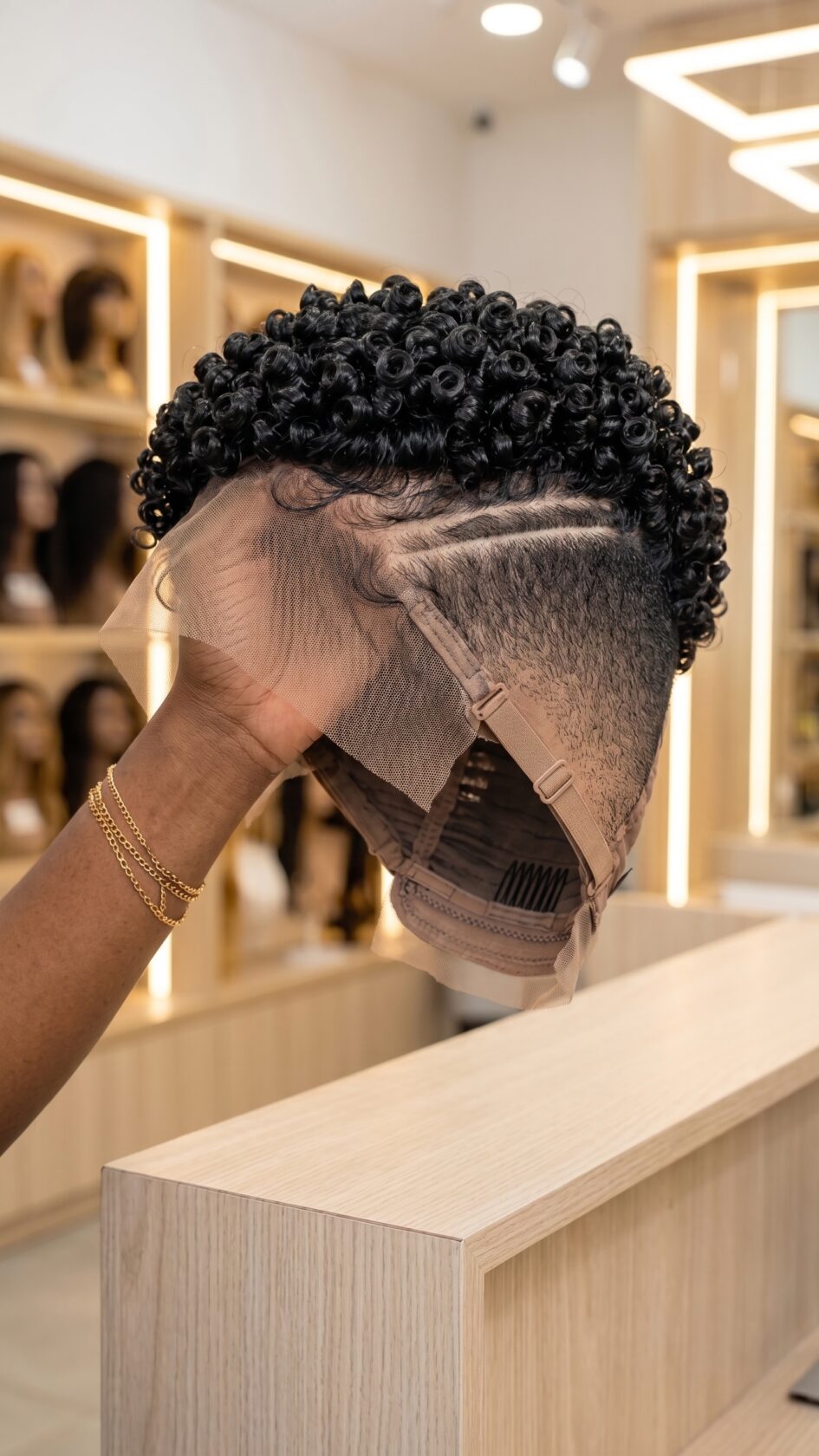
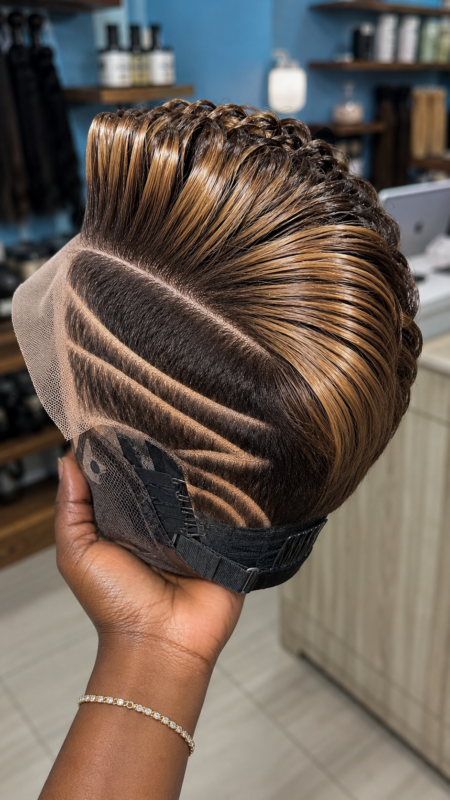
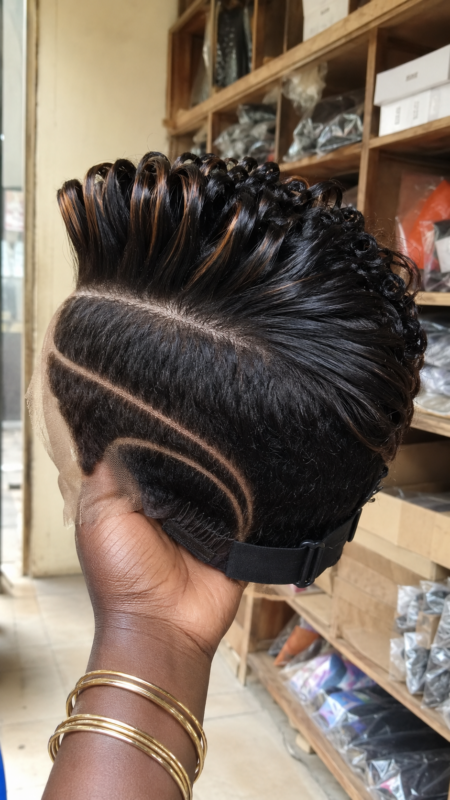
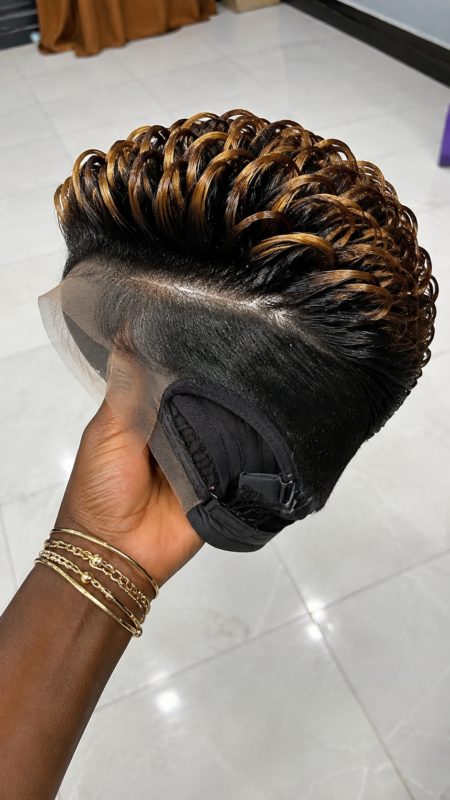
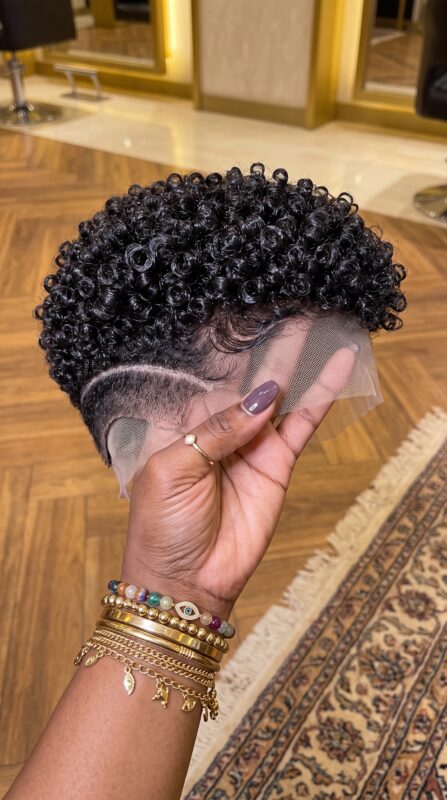
On a short curly pixie wig, buyers usually look at the glossy ringlets first. They notice the lace, the carved side line, or the density at the crown. But on a unit like this, the most revealing part is not the top. It is the shortest side.
That is because the faded side panel has almost no hair to hide construction mistakes. If the cap base is bulky, if the strap sits too visibly, if the seam is poorly placed, or if the low-density area fails to blend, the side will expose it immediately. Before you pay for a pixie wig like this, you need to know whether the shortest part of the unit was built to conceal the hardware beneath it or whether it only looks good in one photo angle.
Where To Buy A Curly Pixie Wig With A Clean Faded Side
Custom wig makers. Custom makers are often the best option when the side profile matters. Ask specifically how the faded side section is built, how dense that area is, and whether the inner cap hardware can be seen through the shortest panel when the wig is worn.
Instagram and TikTok sellers. Social sellers often focus on the top curls and baby hairs. Ask for a side-profile video in normal light. Tell them to tilt the wig slightly and show the short side from more than one angle so you can judge whether the low-density panel is hiding the cap correctly.
Etsy. Independent makers may offer more detailed customization for side design, fade depth, and perimeter blending. Read carefully to see whether the faded area is knotted, cut, ventilated, or simply thinned mechanically.
Marketplaces like Amazon, AliExpress, and Temu. Budget listings may use very flattering images, but customer photos often reveal whether the shortest side looks convincing in ordinary use. On a pixie wig, that side profile is one of the most useful buying tests.
Local beauty supply shops and salons. Local shops are helpful because you may be able to hold the wig up at head level and inspect the faded side directly. That is far more informative than judging only a front-facing mannequin image.
Vendors and wholesalers direct. Ask for the cap specification and photos of the inside and outside side panel. A useful question is: “Can you show where the strap, seam, and cap edge sit directly behind the faded side?”
Regionally. Wig makers in Lagos, Accra, Atlanta, London, and major South African hair markets often understand short pixie demand well, but not all use the same construction methods. Use photos and follow-up questions instead of trusting the product label alone.
Vet the seller. Favor sellers who show top view, side view, underside, and close-ups of the faded panel. A seller who hides the shortest side is hiding the most important evidence.
Red flags. Be cautious if every photo is taken from above, if the side is always shown in shadow, if the low-density panel looks heavily filtered, or if the seller refuses to show the side in motion.
When you order, send. Provide your cap size, preferred side silhouette, whether you want a soft fade or a sharper undercut look, and reference photos that clearly show how exposed the side panel should appear.
Contact / order inquiries: WhatsApp [WhatsApp: +XX XXX XXX XX XX]
How Much It Costs
Premium human hair. A well-made black human-hair curly pixie with a carefully built faded side can commonly range from about $250–$430, especially when the side construction is refined and the cap mechanics are neat.
Standard human hair. Around $180–$300 can buy a strong short curly unit with a believable top and decent side profile. At this level, the difference often comes down to how carefully the shortest side was finished.
Basic human hair. Lower-priced human-hair units may still look attractive from the front, but the side panel may show more obvious cap structure, heavier knots, rougher thinning, or less thoughtful seam placement.
Good synthetic. Around $60–$150 can buy a very attractive preset pixie. Synthetic units may hold the curl well, but the low-density side still needs careful inspection because the cap and hardware can remain the weak point.
Basic synthetic. Around $25–$70 is common for budget pieces. This is where hardware visibility, bulky side construction, and less believable fade blending become more common.
What the price may include or exclude. Ask whether lace work, custom cap sizing, perimeter shaping, carved lines, side-panel refinement, and cap-color matching are included or added separately.
Shipping and duty. International orders may increase sharply after shipping fees, customs, and taxes. Always compare the landed total rather than only the price of the wig itself.
Ongoing costs. Short units are often cheaper to maintain overall, but side repairs can be more specialized. If the faded section loosens, frays, or begins exposing hardware, repair may require a skilled wig maker rather than simple at-home touch-ups.
First-year total. Include washing products, curl refresh products, possible lace work, minor repairs, and any cap adjustment if the side fit is not perfect out of the box.
Cost per wear. A wig that looks good from every angle usually gives better value than one that only photographs well from above. Short pixie units are judged fast, so construction flaws get noticed quickly.
What a very low price may signal. A very low price can mean generic cap sizing, rougher fade construction, less refined side blending, lower-grade lace, or visible hardware hidden only by careful photography.
Deposit structure. Custom orders often require around 30–50% upfront, with the rest due before shipping. Keep a written record of any instructions about the side profile and cap construction.
Shipping, Delivery, And What To Expect After Ordering
When the wig arrives, inspect the faded side before trimming the lace or making any alterations. Photograph the top, the side panel, the perimeter, the inside cap, the seam placement, and the strap area while the unit is still returnable.
Do not judge the side only in one lighting condition. Check it in bright indoor light and softer light. A low-density side panel that looks clean in shadow may reveal the cap more clearly in brighter lighting.
If possible, look at the side while slightly rotating the wig. A well-built faded side should remain believable from more than one angle instead of depending on one exact pose.
The Faded Side Has To Hide The Cap Without Looking Too Dense
This is the central challenge in a wig like this. The shortest side cannot be too full, or it will stop looking like a fade. But it also cannot be too sparse if the result is a transparent panel that reveals the hardware underneath.
That makes the side one of the hardest balancing acts in pixie-wig construction. The maker is trying to create the appearance of short hair growing close to the head while still concealing the cap structure behind it.
When done well, the side looks light, neat, and believable. When done poorly, it either becomes bulky like a padded flap or so thin that the strap path, seam, or cap edge starts reading through the hair.
Low-Density Hair Shows Construction Faster Than Long Hair
Long wigs have a major advantage: they can hide a lot. Extra length and movement can cover seams, edge transitions, and small construction flaws. A short pixie with a shaved-looking side has no such protection.
That is why the shortest side tells the truth faster than the curl crown. The ringlets on top can distract the eye, but the low-density panel works like a reveal window. If the cap was built heavily, it will show there first.
Buyers who understand this usually become much better at judging pixie units overall. They stop asking only whether the curls are pretty and begin asking whether the wig was engineered well enough to survive close inspection.
Strap And Seam Placement Matter Most When The Side Is Exposed
On a wig with fuller sides, the location of the strap or seam may not matter much visually because the surrounding hair covers it. On this kind of pixie, the side is intentionally exposed.
That means the strap path and seam placement become part of the visible architecture of the wig, even when you are not directly looking inside it. If the strap sits in a zone that corresponds to the faded side, the wearer may see the side looking too structured or slightly raised. If the seam is poorly aligned, the short side may look interrupted rather than naturally blended.
This is not the same question as whether the strap makes the wig secure. A wig can be secure and still reveal too much of its inner structure through the shortest side.
Cap Color And Side Density Must Work Together
Another reason this side matters is contrast. If the cap base color is too different from the hair and skin relationship in that area, the side can look artificial even when the fade is technically neat.
On a low-density panel, the eye reads tone quickly. If the cap underneath is too light, too dark, or too flat-looking for the intended effect, it may create an odd patchy appearance. The buyer may think the fade itself is wrong when the deeper issue is actually what is sitting beneath it.
That is why side realism is not only a haircut issue. It is also a cap-visibility issue.
A Geometric Side Design Makes Flaws Easier To Notice
This wig includes a clean carved line above the faded side. That detail adds style, but it also raises the standard. Once a wig contains a sharp geometric feature, the surrounding side panel has to be equally clean.
If the fade looks too bulky, if the side panel sits unevenly, or if the inner structure reads through the hair, the carved line can actually make the flaw more obvious. The precision of the design draws attention to the area and invites closer inspection.
In other words, decorative detail does not hide weak construction. It often exposes it.
The Best Test Is Motion, Not A Frozen Pose
Still photos are useful, but they can flatter a short wig too much. The most informative test is a small movement test. Ask for the wig to be tilted slightly, turned a little, or shown in a short side sweep.
When the angle changes, a poorly built side often gives itself away. You may begin to see the cap edge more clearly, the low-density area may lose its softness, or the fade may start looking like a patch placed over hardware instead of a true short side profile.
A good pixie side should remain believable in motion, not only in one perfect still frame.
Before You Pay
- Can you show the faded side in bright light from more than one angle?
- Can you show where the seam and strap sit behind the shortest side panel?
- Does the low-density side still hide the cap well when the wig is tilted slightly?
- Is the side panel hand-refined, thinned, knotted, or machine-finished?
- If the side reveals too much hardware when worn, what is the remake or return policy?
Trimming The Lace
Do not trim the lace before you are sure the side profile sits correctly. On a pixie wig, trimming too early can make it harder to evaluate the true silhouette of the unit.
Once you are satisfied with the overall fit, trim the lace gradually and conservatively. Recheck the temple and side profile after each small section. On very short units, small changes in the front edge can make the side look different very quickly.
If you are uncertain, let a wig stylist handle the first fitting and trim. Short wigs leave very little room for error.
Search Terms
faded side curly pixie wig · low density side panel wig · curly pixie wig side construction · lace pixie wig shaved side · black ringlet pixie wig fade · short curly wig visible cap side · glueless pixie wig side profile · carved side curly pixie wig
Final Thoughts
The shortest side of a curly pixie wig is often the most honest part of the unit. It has almost no excess hair to hide bad seam placement, visible hardware, poor cap color, or clumsy density work. That is why it deserves more attention than most buyers give it.
If you want a short pixie that looks convincing beyond one flattering angle, learn to judge the faded side as carefully as you judge the curls, lace, or baby hairs. A beautiful crown can attract the click, but the shortest side is what often decides whether the wig feels truly well made.