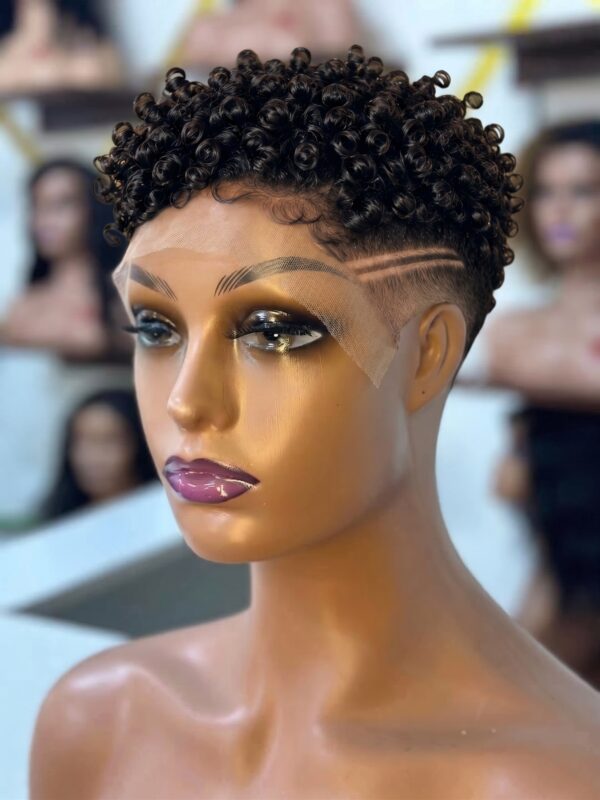
Every strand is where a hand put it. When looking at a sculpted pixie unit with geometric parting lines, the structural foundation resting under the lace matters infinitely more than the slicked hair resting on top. A pre-styled short unit looks pristine fresh out of the box, but the longevity of these razor-sharp parted designs depends entirely on single-knot density, lace transparency, and how the underlying ventilation transitions into the cropped sides.
Visual precision in short unit construction requires a specialized knotting technique. Unlike long wigs where density hides imperfect parting tracks, a short carved pixie leaves every millimeter of lace exposed along the design line. The contrast between the slicked top volume and the short ventilated stippling on the side determines whether the unit mimics a real barber-cut taper or reveals itself as a bulky lace overlay.
Understanding how these intricate scalp cuts are ventilated, how to preserve the razor-defined lines, and where to source custom construction will save you from paying premium prices for a unit that loses its shape after the first wash.
Where To Buy A Carved Side Part Pixie Wig
Custom makers and lace studios are the safest route for anything with a carved side parting, because you are really commissioning two things: a precise hand-knotted lace base and a stylist who can carve geometric scalp lines without weakening the mesh. Ask whether the parting track is hand-ventilated or created by clipping down machine tracks. If it is hand-knotted, ask for close-up video of the lace stretched over a hand under natural light. Turnaround for a custom short unit usually runs two to four weeks.
Instagram and TikTok sellers are where most sculpted pixie units actually surface. Search specific terms like “carved side part pixie” rather than broad keywords, and look for sellers who show the unit being turned under daylight on video. A carved side part pixie wig is easy to photograph from one deceptive angle and hard to fake in a continuous ten-second video clip.
Etsy works when a maker has an established portfolio and genuine buyer photos underneath the listing. The risk on short custom units is stolen studio imagery: a seller lifts a carved-part photo they did not create, and the unit that ships has thick machine tracks with no defined scalp design. Read reviews specifically searching for comments on parting accuracy and lace softness.
Marketplaces like Amazon, AliExpress, and Temu can make sense for a simple synthetic pixie in a plain jet black, but they rarely execute a clean carved side part with fine ventilated stippling. What arrives is usually a bulky machine-sewn unit with dark double knots that look like heavy dots along the line. Buy from these platforms only when your expectations are basic.
Local beauty supply shops and salons are worth visiting to inspect cap dimensions and lace shades in person. Trying a short cap on tells you immediately whether your hairline matches the placement of the pre-carved track. You pay a higher price in-store, but you eliminate the risk of receiving an ill-fitting cap on a short unit where mistakes cannot be hidden under long hair.
Vendors and wholesalers direct only pay off if you are purchasing in bulk, as most enforce minimum order quantities. For a single unit, you are far better off dealing directly with a custom maker who will bleach the knots and define the razor lines for you prior to shipping.
Regionally, intricate short pixie construction and custom lace ventilation work are exceptionally strong out of Lagos, Accra, Atlanta, London, and across South Africa, where specialized ventilation artists showcase their process publicly on social channels.
Vet the seller before money moves. Check how long the business account has been active, look for consistent lighting across buyer photos, message a clear question about knot density along the parting line, and request a brief live video of the unit. A seller who hesitates to show the lace up close is signaling potential quality issues.
Red flags include stock photos appearing across multiple unrelated stores, refusal to provide video verification, prices set far below market standard for hand-knotted lace, and demands for full payment via unverified wire methods.
When you order, send your head circumference, ear-to-ear measurements, a clear reference photo marking the preferred side for the parting line, and your required delivery deadline. The direction of the carved track is permanent on a custom piece; state it clearly to avoid getting a mirrored layout.
On payment, a deposit structure of thirty to fifty percent with the remaining balance due after video approval before dispatch is standard. Always use payment methods that offer buyer protection mechanisms.
Contact / Order Inquiries: WhatsApp [WhatsApp: +XX XXX XXX XX XX]
How Much It Costs
Pricing a carved side part pixie wig reflects the intensive labor involved in hand-knotting fine hair strands along narrow parting channels.
Human hair, full custom build, HD lace frontal with bleached single knots along the parting and carved taper styling: roughly $220 to $450. Human hair, mid-range build with standard Swiss lace and a basic carved line: about $140 to $280. Human hair, basic machine-sewn cap with a pre-cut fixed parting: around $65 to $150. Good heat-resistant synthetic fiber with HD lace parting: $55 to $120. Basic synthetic fiber with hard cap construction: $25 to $50.
What the price includes and what it excludes requires careful checking. A full custom quote should cover the HD lace base, knot bleaching along the carved line, density graduating on the sides, and root setting. It often excludes express delivery, custom cap sizing adjustments, or touch-up styling supplies. Ask the seller whether the sharp wave ridges in the photo are set permanently or need re-molding upon unboxing.
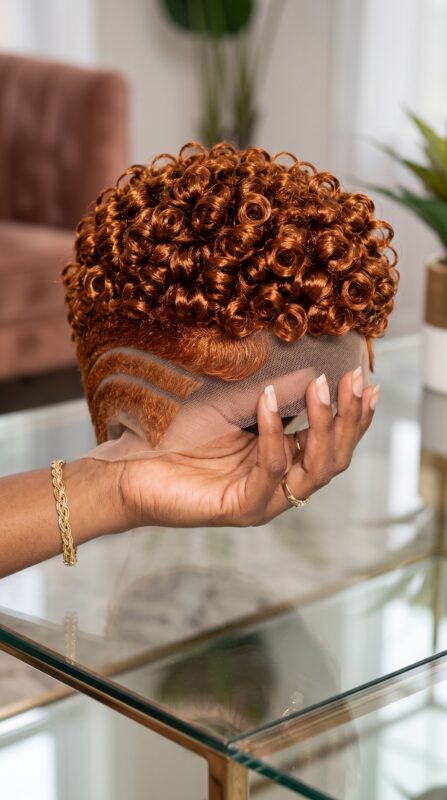
The black color on this unit keeps the base cost lower than colored options, as there is no chemical lifting required. However, adding high-definition HD lace adds roughly $20 to $50 over standard lace, while fully bleached single knots along the entire carved track typically add $15 to $40.
Shipping and customs sit outside the base price and vary by destination; plan for a realistic international delivery fee and verify your local customs threshold in advance.
After-purchase costs include a proper canvas block head ($15–$25), a wax stick and hot comb to maintain the slicked top ridge ($35–$68 total), and occasional lace touch-ups. First-year math: unit cost plus shipping, customs, essential maintenance tools, and two professional resets lands total expenditure between $320 and $550 depending on how frequently the unit is worn.
Per-wear costs drop significantly with regular use. Worn three times a week over a full year (156 wears), a mid-tier $350 investment breaks down to roughly $2.24 per wear. A suspiciously low price almost always indicates double knots along the parting line, heavy machine tracks near the temple, or stiff synthetic blend hair that frizzes when heat is applied.
Deposit structure follows standard custom protocols: thirty to fifty percent down to initiate hand-knotting, with the balance paid after reviewing high-definition photos or video of the completed unit.
Shipping, Delivery, And What To Expect After Ordering
A pre-styled pixie unit with slicked top waves requires structured packaging to prevent the ridges from flattening under pressure during transit. Request that the maker box the unit with internal support foam or send it mounted on a protective head form. Tracked express shipping is essential for custom lace work to monitor real-time transit status.
Upon unboxing, check the lace transparency and inspect the carved parting line under clear light before cutting any perimeter mesh. Expect the slicked top section to require a quick touch with a hot comb or styling wax to crisp up any ridges that settled during shipping. A minor settling of styled hair during transit is completely standard and easily corrected at home.
The Mechanics Of Single-Knot Ventilation Along Carved Partings
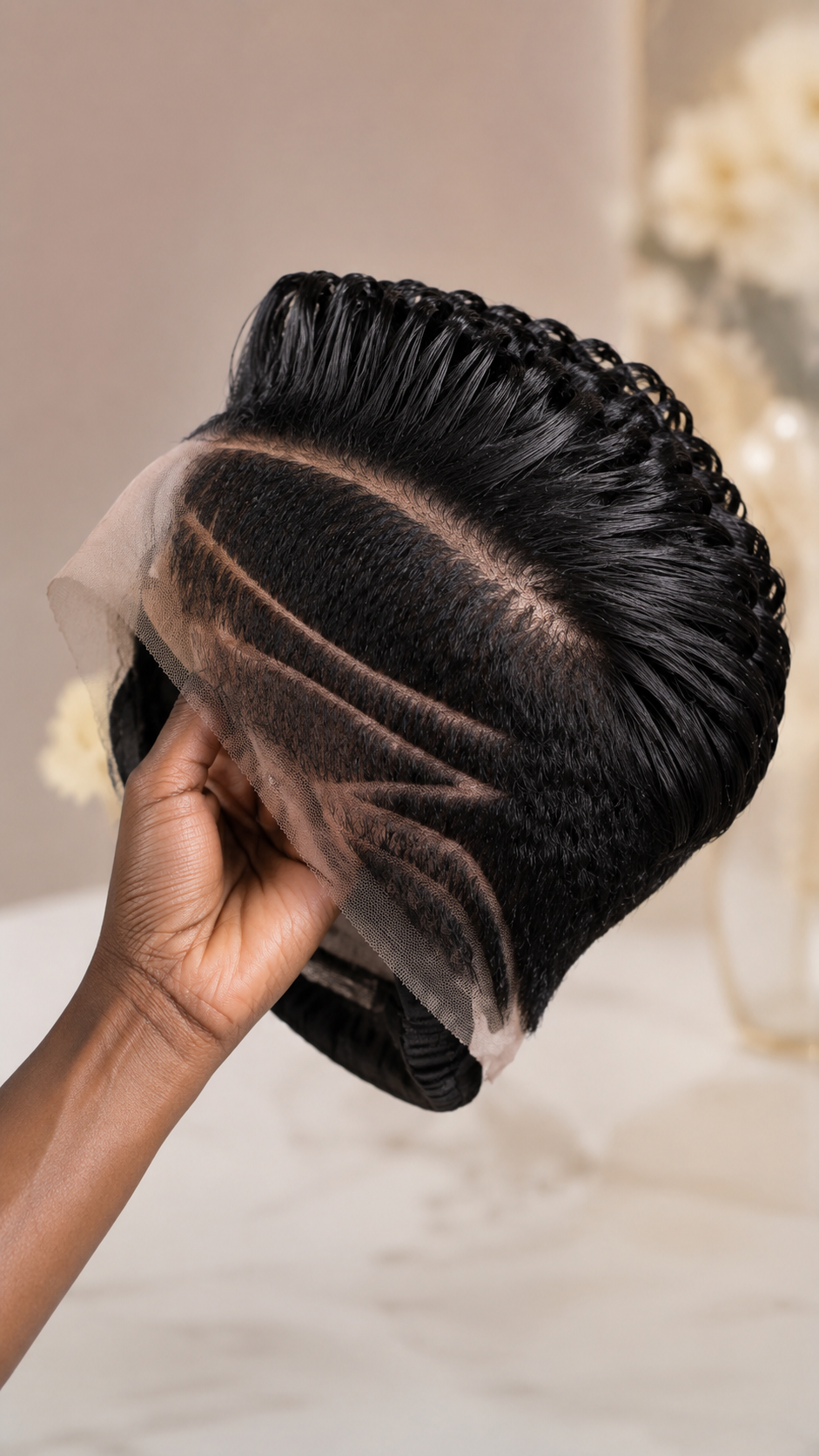
The defined geometric line running across this short pixie relies on meticulous single-knot hand ventilation. Each hair strand along the visible parting boundary must be tied individually into the Swiss lace grid using ultra-small ventilation hooks. Double knotting in this specific area creates visible dark specks that ruin the scalp illusion when viewed up close.
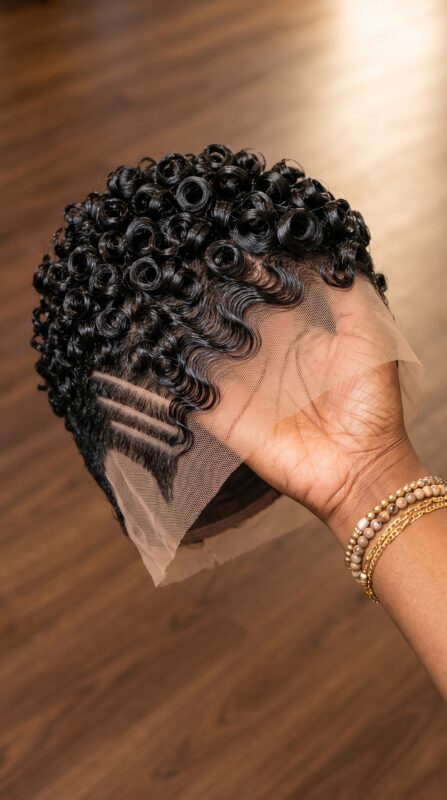
Directly adjacent to the carved line, the hair transitions into a shorter, high-density stippling technique that mimics a fresh barbered skin fade. Maintaining a low hair count at the immediate parting edge allows the unit to lay completely flat against the skin without relying on heavy gel layers that can clog the delicate lace mesh.
Managing Top Volume Versus Side Flatness
A primary technical challenge when constructing short sculpted pixies is managing bulk where the volumized crown meets the closely cropped sides. Without precise density graduation, the hair bulges outwards at the temples, creating a boxy head silhouette.
To achieve the sleek, pompadour-inspired ridge shown in the photo, the crown tracks are ventilated at forward angles, while the hair on the side panels is knotted flat against the cap foundation. Utilizing a thermal hot comb along the root directional seam locks in hair memory, ensuring the top structure stays elevated without collapsing over the carved side detail.
High-Definition Lace Selection For Short Tapers
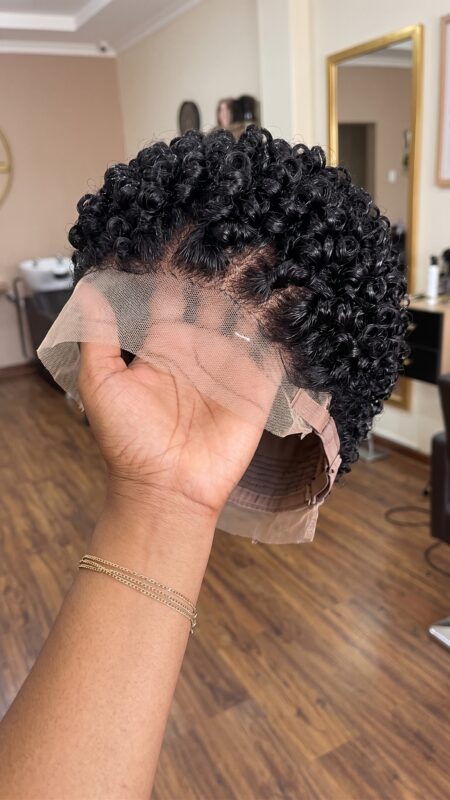
Short haircut styles offer zero length to hide visible lace borders along the forehead and sideburns. Consequently, high-definition (HD) Swiss lace is mandatory for creating a completely meltable perimeter.
HD lace uses finer, softer threads that conform smoothly to varying skin tones with minimal adhesive required. Because ultra-thin HD lace is more fragile than standard lace, the unit must always be adjusted by pulling the internal elastic cap bands rather than tugging on the frontal lace edge itself.
Maintenance Requirements For Slicked Wave Textures
Preserving the sharp ridges and deep luster of a sculpted short unit requires structured daily maintenance. Over-washing strips the hair fibers and softens the set shape, leading to premature frizz along the carved design tracks.
Nighttime care is essential for longevity. Wrap the sides firmly with a silk or satin wrap strip to keep the cropped edges pressed flat while sleeping. In the morning, lightly mist the top ridge with water, apply a dime-sized amount of styling foam, and pass a hot comb lightly along the top edge to sharpen the silhouette without disturbing the underlying lace.
Before You Pay
-
Has the maker bleached the single knots along the entire length of the carved side part?
-
Is the frontal constructed using delicate HD lace or durable standard Swiss lace?
-
Is the short side section hand-knotted strand-by-strand or made from trimmed machine tracks?
-
Does the cap include adjustable tension straps and internal clips for a secure glueless fit?
-
What is the seller’s return or adjustment policy if the pre-carved parting line does not align with your natural hairline?
Trimming The Lace
Trimming the lace on a short carved pixie requires careful precision due to the close distance between the perimeter edge and the hair design tracks. Place the unit on a properly scaled canvas head or align it against your own hairline using sectioning clips before making any cuts.
Use sharp micro-tip scissors or a craft razor to cut the excess lace. Avoid making long straight cuts; instead, use tiny, staggered zig-zag motions that follow your natural hairline contour. Maintain a shallow margin of approximately 1 to 2 millimeters in front of the first row of knotted hairs to protect the perimeter ventilation and prevent premature shedding.
Search Terms
carved side part pixie wig • sculpted short pixie unit • hand knotted side part wig • HD lace pixie wig • barbered short taper wig • razor line parting wig • slicked mohawk pixie unit • custom ventilated short wig
Final Thoughts
A carved side part pixie wig is a showcase of precision lace ventilation and styling technique. Because short styles leave no room to hide structural flaws, every detail—from the single knots along the parting track to the density transition on the tapered sides—must be built with care. Evaluating cap design and lace quality before buying ensures a natural look that holds up over time.
When crafted by skilled wig makers who understand hair directional knotting and HD lace integration, a sculpted pixie offers a striking, polished aesthetic that requires minimal daily effort. Focus on foundational quality over low prices, handle the delicate lace with care, and use proper night wrapping techniques to maintain a clean, barber-cut profile that lasts.

Pliz tell me where you are located